Establish the baseline
Agree indicators, sampling approaches and verification methods before reporting change.
The programme is designed to connect healthier animals, safer milk and stronger institutions. Intended outcomes will be measured against agreed baselines—not presented as achievements.
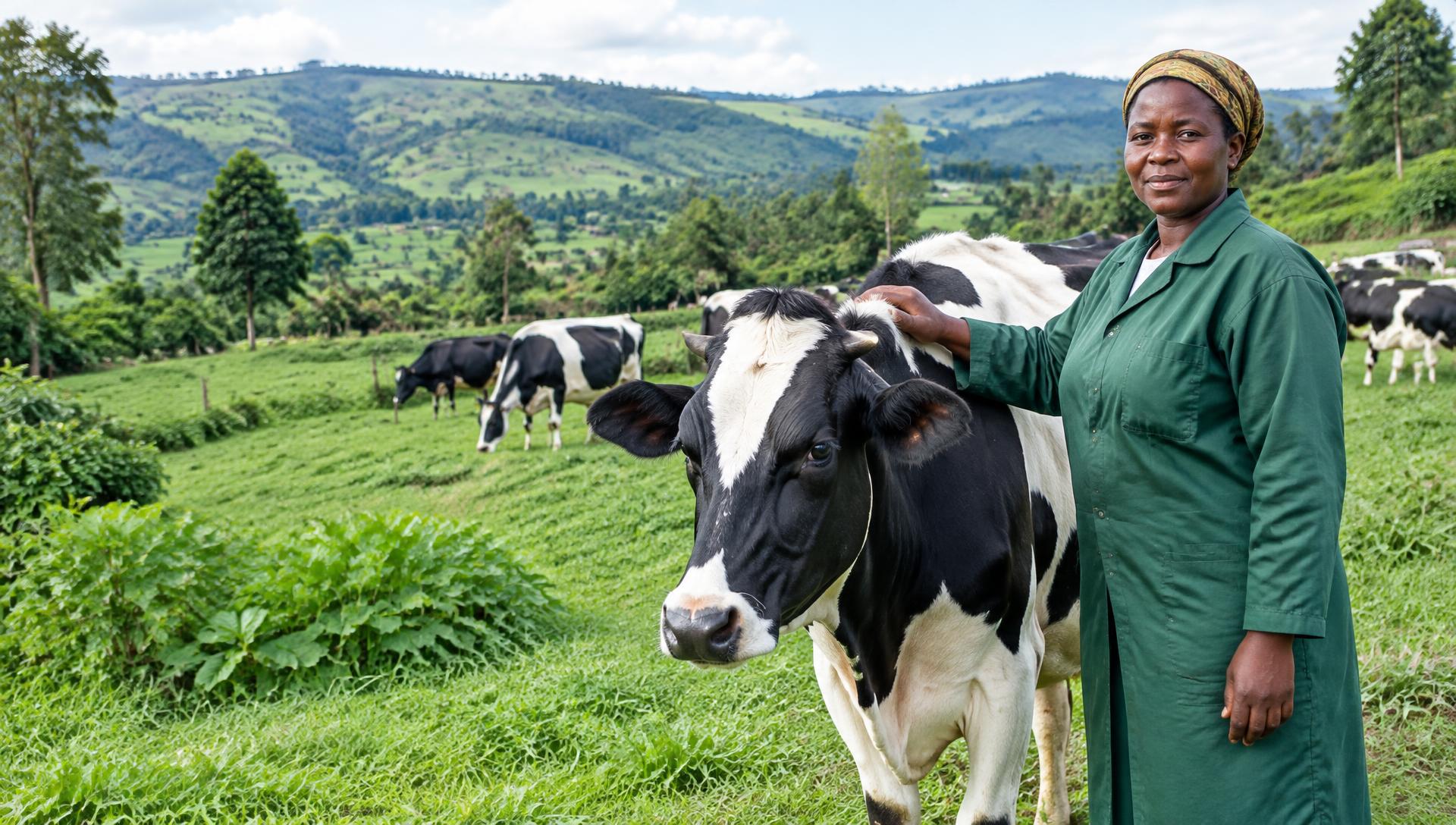
Co-designed delivery will consider barriers faced by women, young people and underserved smallholders. Participation, access and adoption will be tracked with appropriate disaggregation and consent.
Practical husbandry skills, safer milk-handling practices and better access to animal-health knowledge.
Quality assurance, traceability and operating models appropriate to local dairy systems.
Shared surveillance methods, testing protocols and stronger applied research capacity.
Evidence to inform milk-safety decisions, public-health protection and accountable sector development.
Agree indicators, sampling approaches and verification methods before reporting change.
Monitor participation, practice adoption, milk-quality findings, surveillance performance and record completeness.
Use independent evaluation, quality checks and transparent reporting to identify what works and what needs to change.
Sustainability is a delivery responsibility, not a final-stage promise. Local ownership, service viability and institutional capacity will shape every demonstration.
Co-develop protocols and handover plans with relevant Kenyan institutions and local delivery organisations.
Test affordable maintenance, service access and cooperative management without assuming future funding.
Share appropriately licensed protocols, training resources and evaluation findings, while protecting personal and sensitive data.
Document costs, prerequisites and context-specific lessons so others can judge suitability before scaling.
No achieved results are reported. Baselines and outcome targets are pending inception. Verification roles below are proposed, not appointed institutions.
| Indicator / level | Unit | Baseline | Proposed target | Data source | Frequency | Verification responsibility |
|---|---|---|---|---|---|---|
| Farmers engagedOutput | Unique farmers | Inception roster; existing participation not yet verified | Up to 25,000; subject to geography and capacity | Consented registration and attendance; deduplicate across activities | Quarterly | Proposed M&E lead; independent sample checks |
| Animal recordsOutput | Unique animal IDs and linked event records, reported separately | Existing systems assessed during inception | 100,000+ proposed animal records; unique-ID and quality controls | Record registry, duplicate checks and field validation | Quarterly | Proposed digital lead; independent data-quality review |
| Milk-safety complianceOutcome | Share of samples meeting agreed criteria; test-specific denominator | Stratified baseline sampling before target setting | Improvement target pending baseline and applicable standards | Qualified laboratory results; chain-of-custody and quality-control logs | Sampling rounds; proposed quarterly review | Qualified laboratory lead and independent technical reviewer |
| Disease-surveillance performanceIntermediate outcome | Reporting coverage, completeness and elapsed response time | Map existing surveillance pathways and reporting delays | Coverage and timeliness targets agreed after baseline | Event reports, referral logs and authority feedback | Monthly operational review; quarterly reporting | Proposed veterinary lead; authorised surveillance counterpart |
| Training effectivenessOutcome | Knowledge score and verified practice adoption | Pre-training assessment and observed practice sample | Target agreed after pilot; attendance is not adoption | Pre/post assessments and follow-up observation | Each cohort and scheduled follow-up | Proposed extension lead; M&E validation sample |
| Women’s participationInclusion output | Participation share and access barriers; voluntary disaggregation | Stakeholder consultation and participation mapping | Inclusion target pending consultation; no quota assumed | Consented participation records and accessible feedback | Quarterly | Proposed inclusion/safeguards lead; M&E review |
| Environmental performanceOutcome | Selected water, feed and manure-management measures | Seasonally appropriate demonstration-site measurements | Site-specific targets after baseline; no carbon claim | Field measurement logs and verified practice observation | Seasonal measurement; quarterly synthesis | Proposed environmental lead; independent technical review |
Participation does not demonstrate improved income. Records do not establish reduced disease. Long-term impact requires separate evidence and cautious attribution.
Download draft frameworkFor institutional donors, foundations, DFIs and research and implementation partners.